Evidence
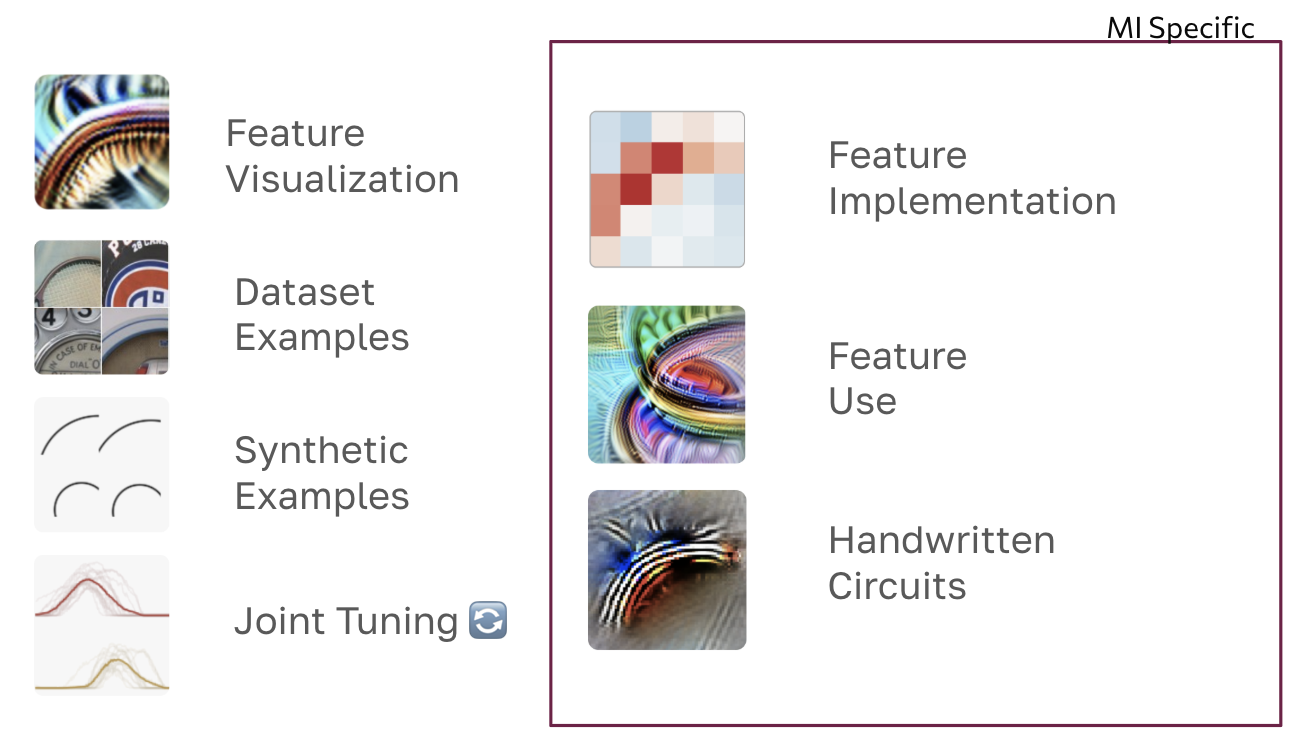
A convincing circuit has several kinds of evidence. Feature visualization suggests what components detect. Weight inspection shows how they connect. Dataset examples show when they activate. Ablation or patching tests whether the behavior depends on them.
Converging evidence
Strong mechanistic evidence combines observational, structural, and causal results. Each method covers a weakness in the others.
Build an Evidence Stack
Turn on the evidence available for a proposed pose-invariant dog-head detector. The conclusion should become more specific as independent methods agree.
Evidence types
1 / 4
Claim strength
suggestive
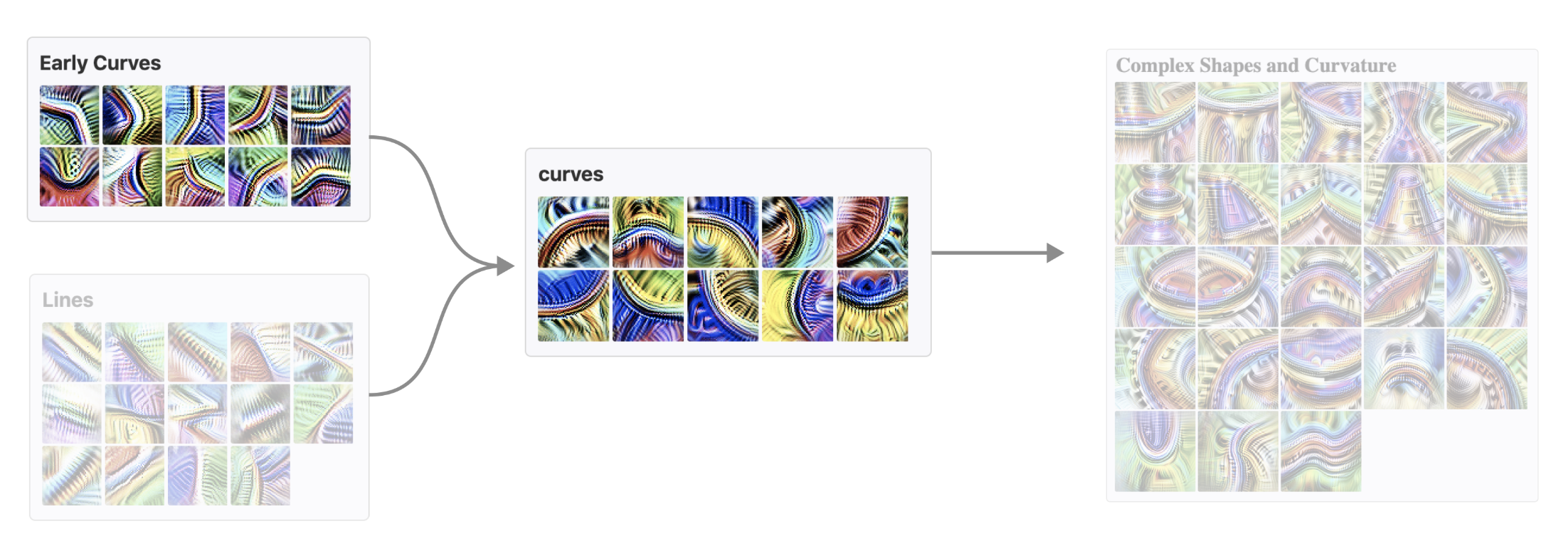
For a curve circuit, researchers can inspect upstream oriented edges, read signed weights, find downstream circle detectors, and hand-set weights that reimplement the behavior. That chain is much stronger than naming a neuron from its top image.
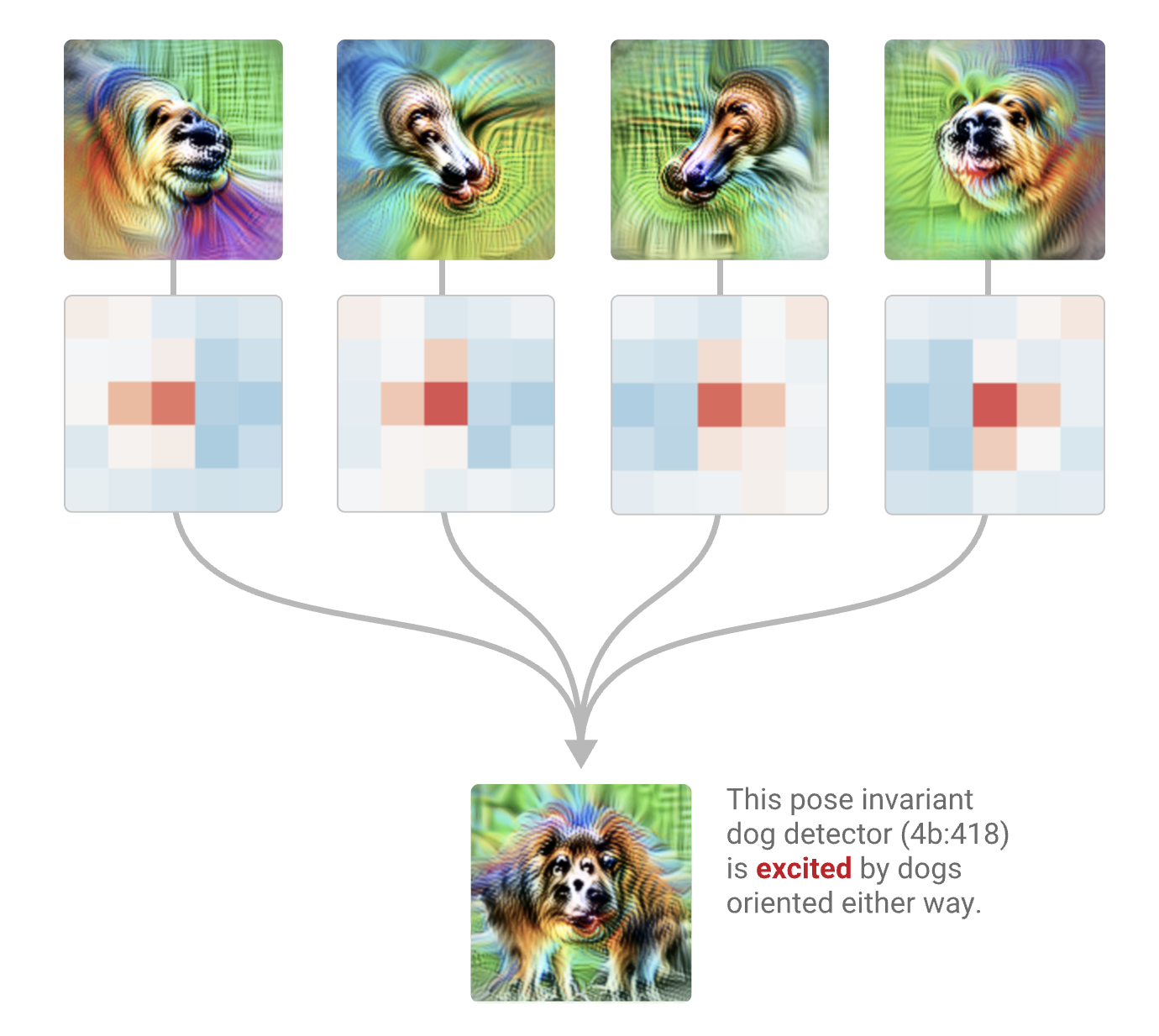
Pose-invariant dog-head detectors are a second example of evidence for circuits. Feature visualization can suggest the sensitivity of a neuron, while dataset examples test how that sensitivity appears in natural images and whether another stimulus also activates it.
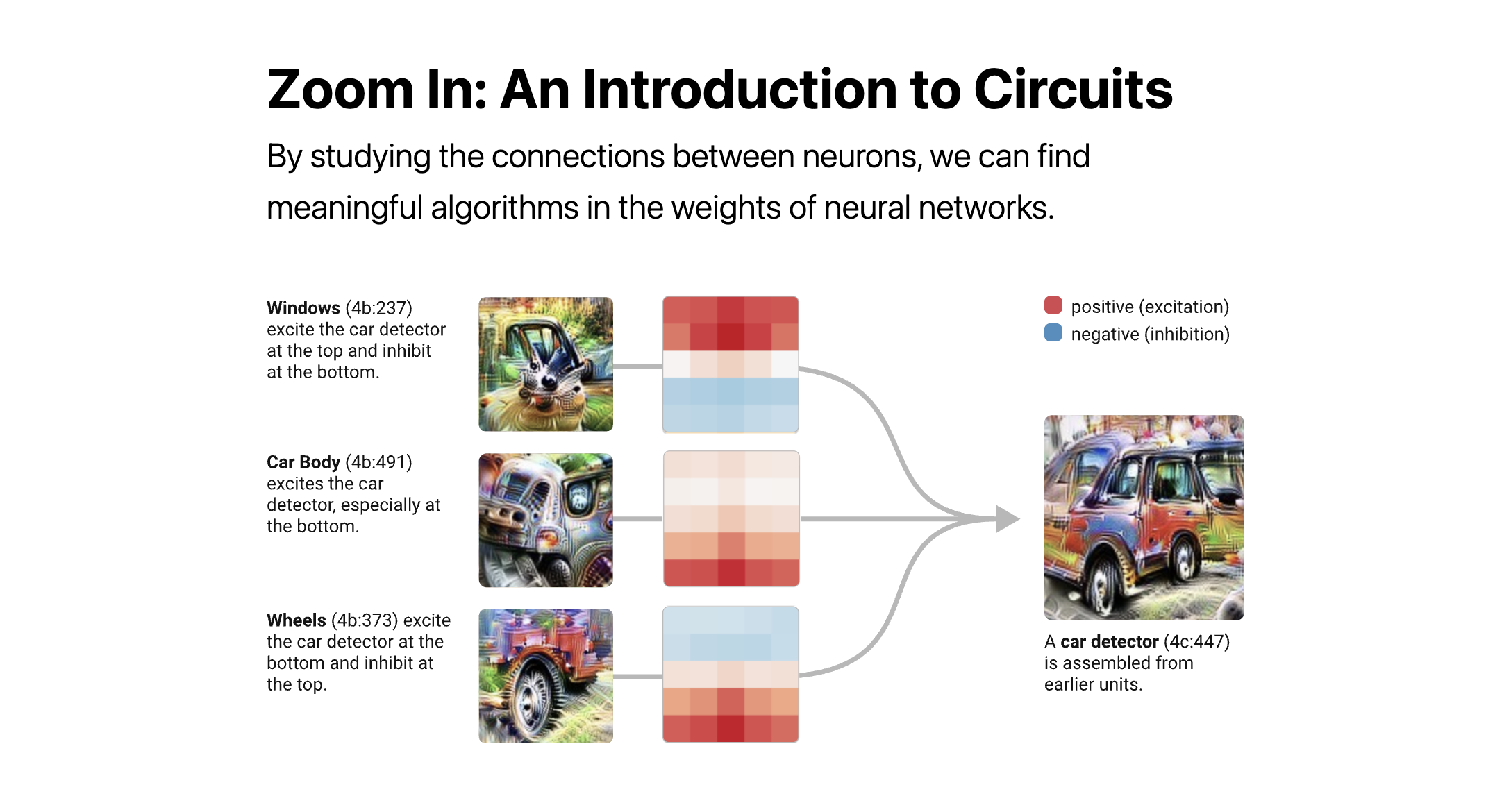
Cars in superposition introduce a limit case for circuit evidence. The circuit can still compute useful car-related features, but a single neuron may not carry one clean semantic label. That example points forward to the superposition hypothesis.
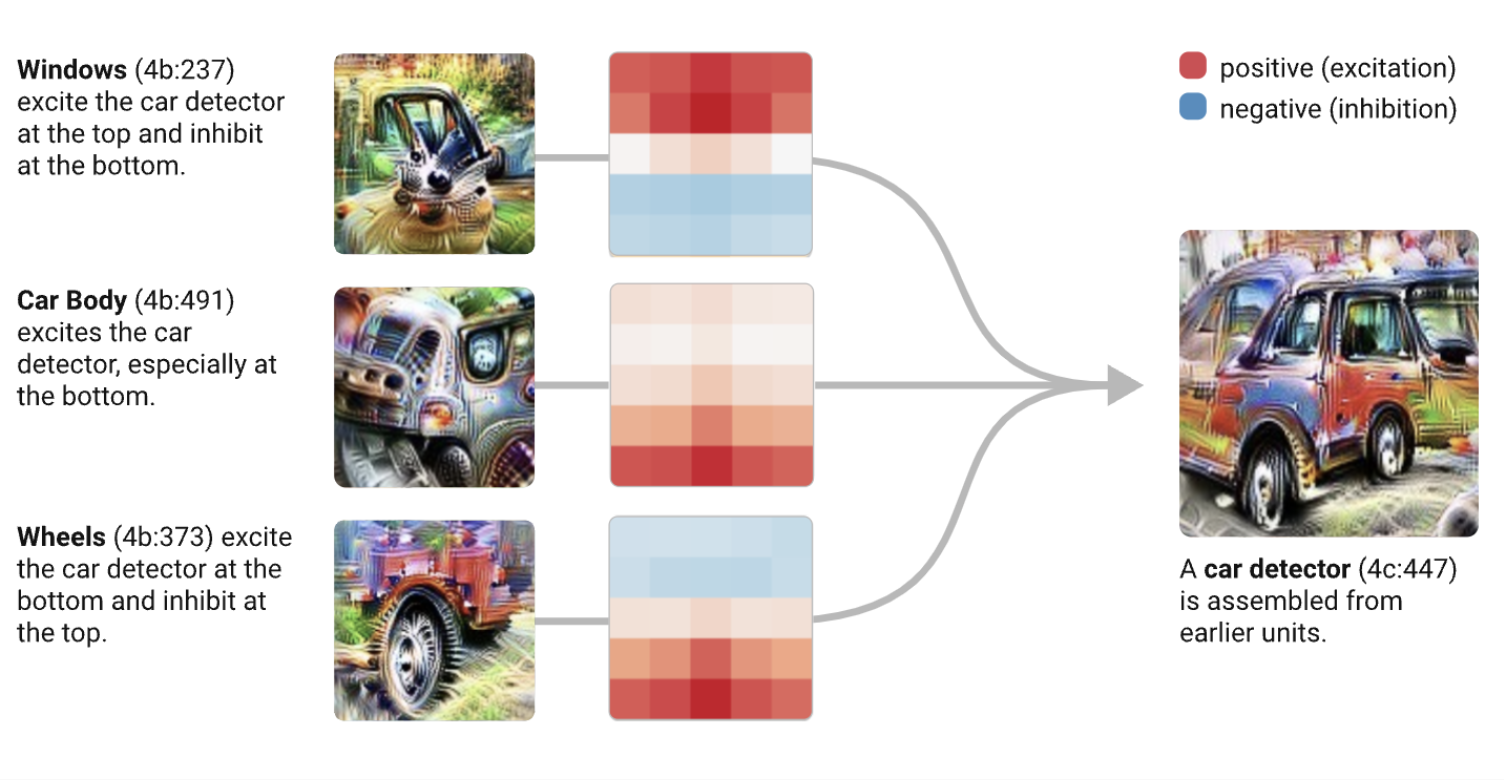
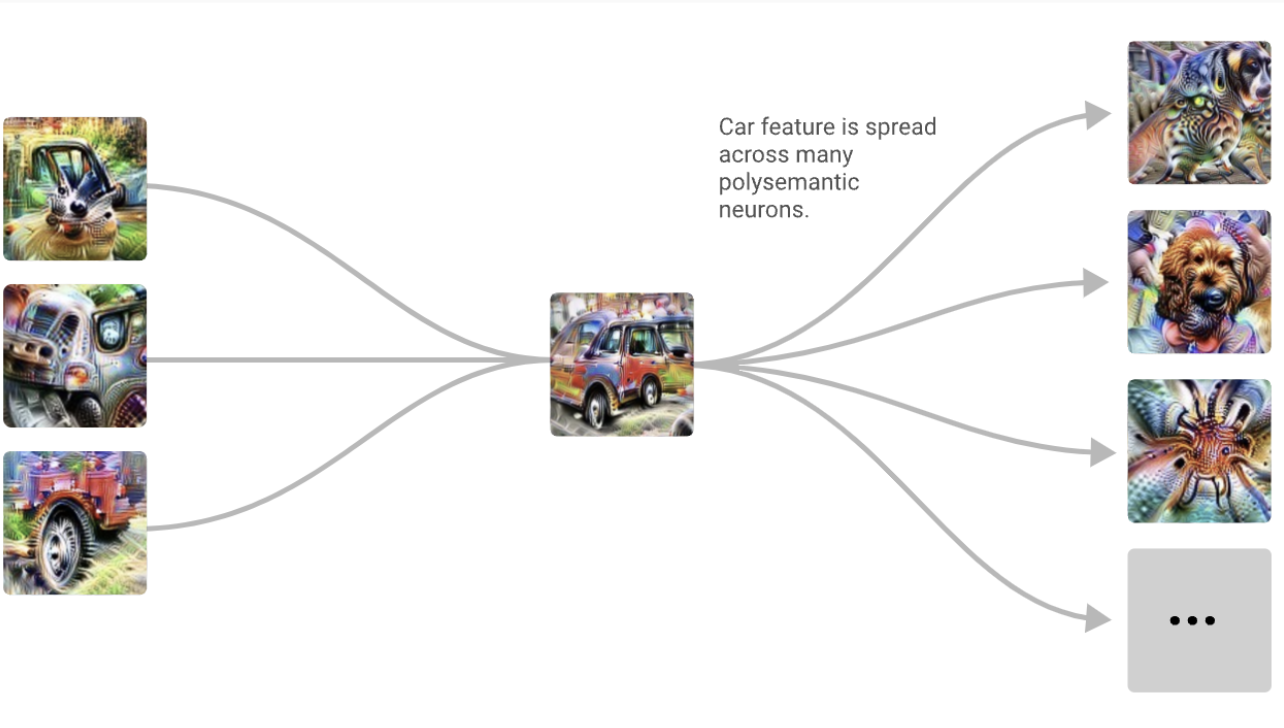
Which result would most weaken a proposed circuit: low activation on one example, or no behavioral effect after a targeted intervention?
A circuit-based explanation should read like an executable account: this feature is detected, that head routes it, this downstream feature combines it with another signal, and the output logit rises.
Useful explanation
A useful circuit explanation is faithful enough to predict behavior, compact enough for a person to inspect, and scoped to the inputs and task where it was validated.
Predict an Invoice Circuit
Adjust three document features and use the visible weights to predict the invoice score before reading the output.
score = .45(0.80) + .40(0.70) + .25(0.40) - .15
Invoice score
0.590
Classification
invoice
What scope statement should accompany a circuit found on short English prompts?