Scaling Sparse Autoencoders and Challenges
Scaling a sparse autoencoder means more activation data, wider dictionaries, larger training runs, and a much bigger evaluation job. A dictionary can contain millions of features. Each one needs examples, labels, quality scores, and ideally causal tests.
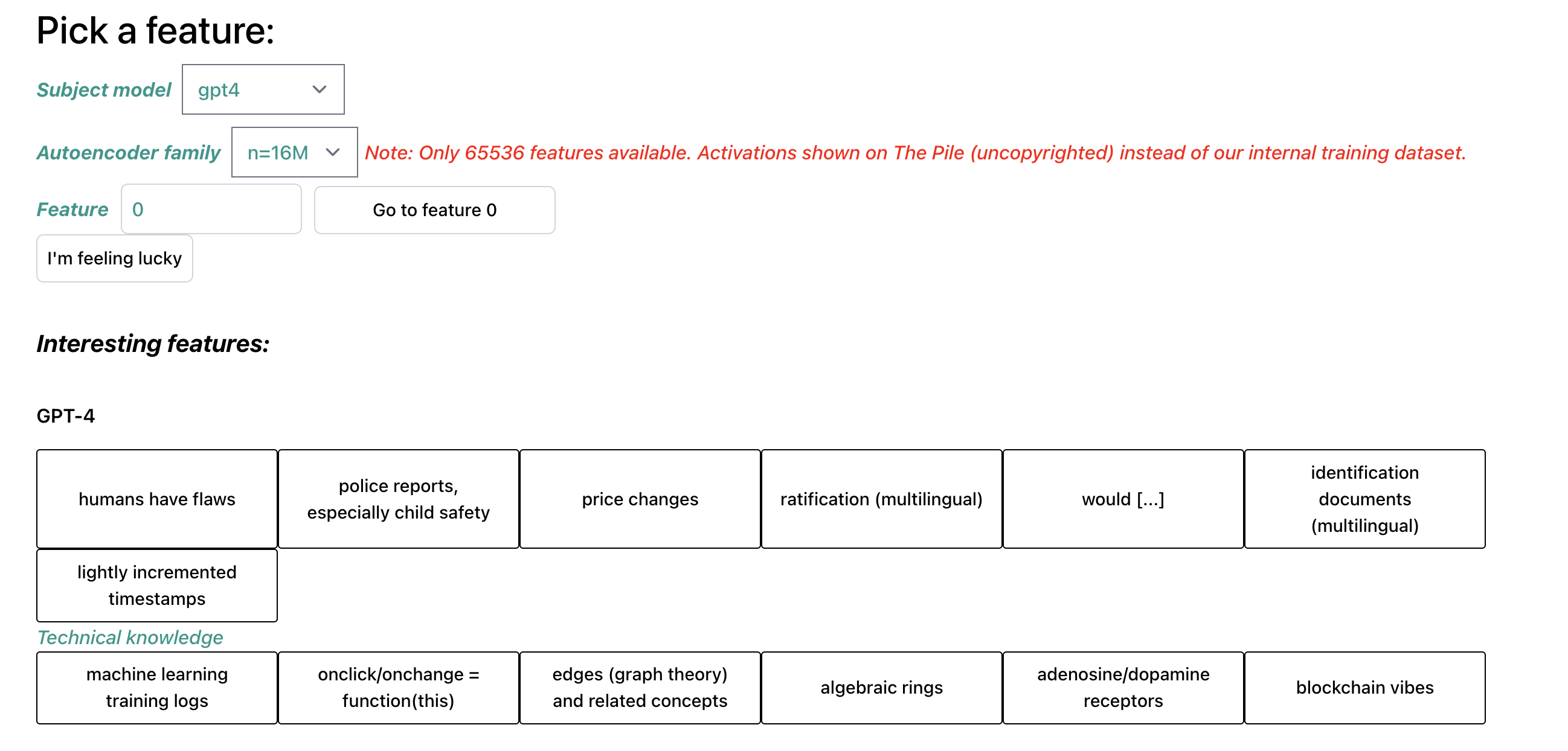
OpenAI
Sparse Autoencoder Feature Viewer
Explore millions of SAE-discovered features, their activation statistics, and the examples that trigger them, at production scale.
Browse a production-scale SAE feature dictionary and inspect top-activating examples directly.
Key tradeoffs
Dictionary width increases capacity. Sparsity reduces simultaneous activations. Reconstruction loss measures preserved information. Dead-feature rate and feature splitting reveal inefficient capacity use.
Teams should choose scale from the decision they need to make. A narrow audit of medical misinformation may need excellent coverage of one domain, not a universal dictionary of every concept in the model.
Why might a smaller domain-specific sparse autoencoder be preferable to the largest possible dictionary?
Beyond dictionary scale, teams face broader scaling challenges. Compute is one bottleneck. Evaluation is another. Automated labels can sound confident while being wrong. Rare but important features may have too few examples. Features can split, merge, drift across checkpoints, and behave differently in new contexts.
Four scaling risks
- Coverage: important mechanisms may be absent.
- Validation: labels outnumber human reviewers.
- Causality: observational catalogs can outrun interventions.
- Transfer: results may fail across models, layers, languages, or domains.
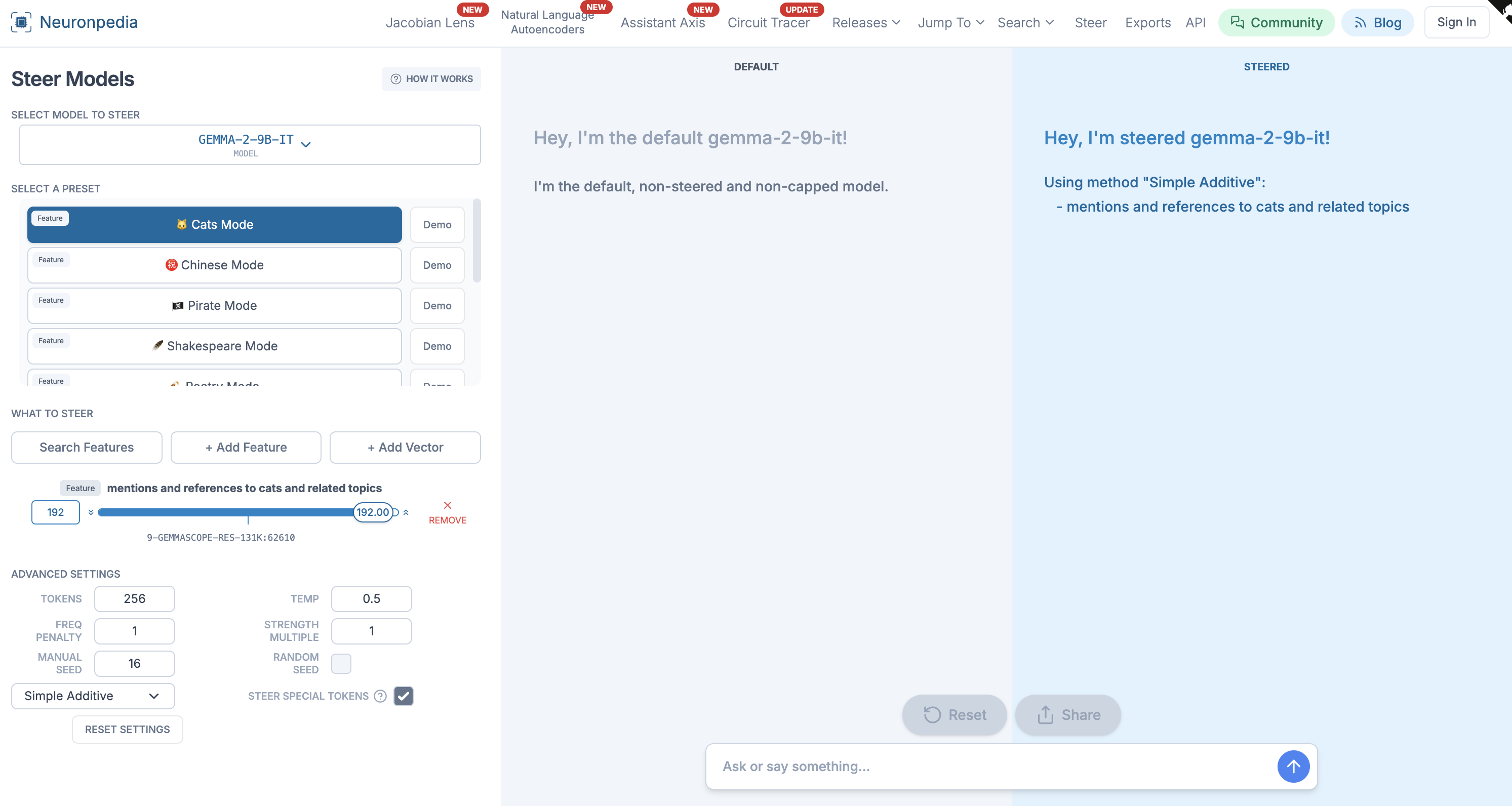
Neuronpedia
Steer Gemma-2-9b-it
Pick SAE features from a large-scale dictionary on Gemma-2-9b-it, set steering strength, and compare generations in real time.
See scaled SAE features deployed as live steering controls on a production-size model.
How would you allocate limited human review across a very large feature library?