Distribution Shift
In week one, students arrive early. By the middle of the semester, the distribution moves five minutes later. Near the end, the class start time becomes a gentle suggestion.
A model trained on week-one arrivals can stay unchanged while its predictions become steadily worse. Distribution shift means the data encountered during deployment differs from the data used for training or evaluation.
Distribution Shift
Watch class arrival times drift across the semester
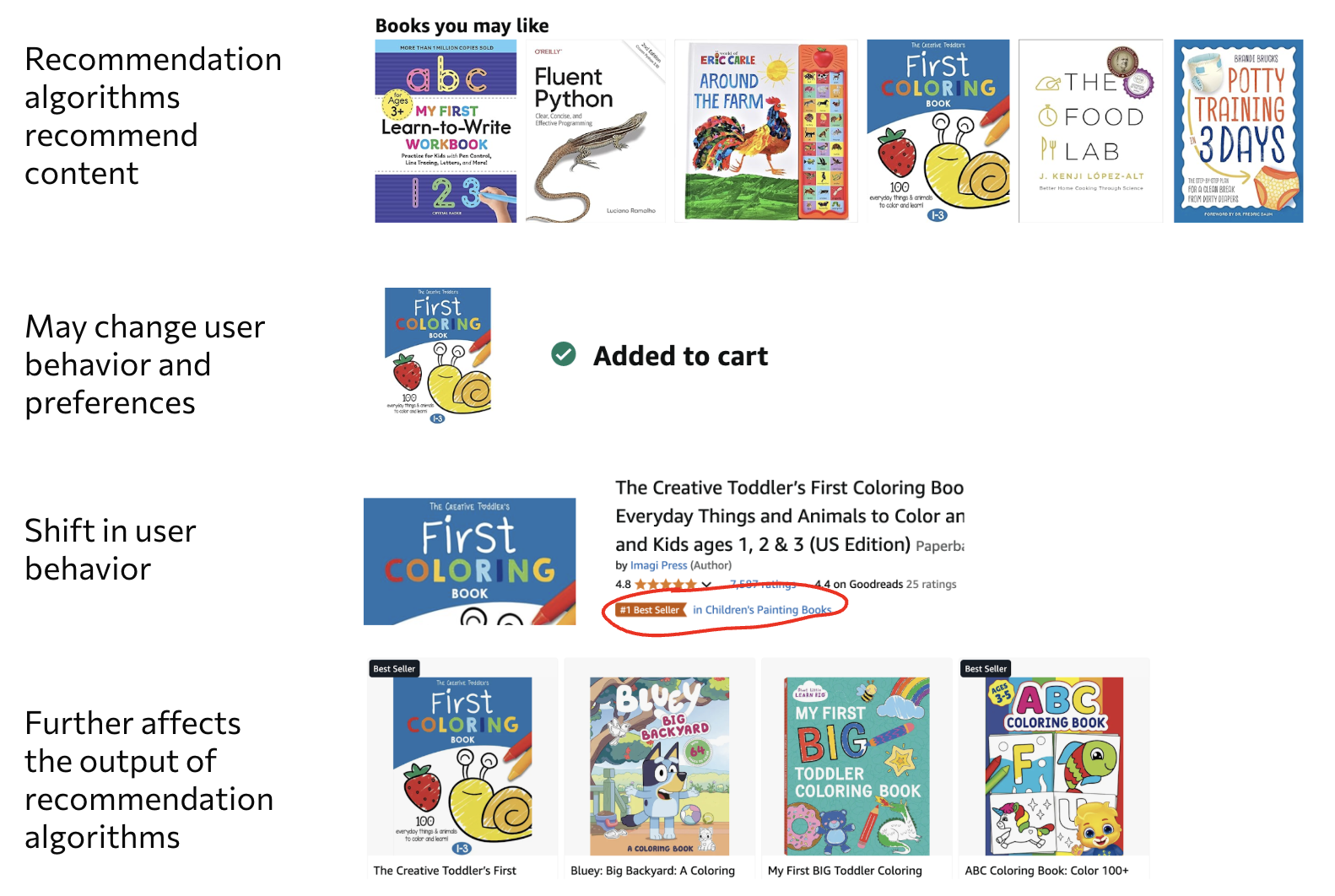
Shift can affect inputs, labels, relationships between inputs and labels, or the population using the system. Some systems also create their own shift. A recommendation system changes what people see, which changes what they click, which changes future training data.
Alignment under shift asks whether safety, fairness, honesty, and controllability survive the change. Monitoring average accuracy alone can miss a failure concentrated in a new subgroup or rare situation.
Supply Chains After a Shock
A supply chain can plan for a predictable holiday surge. A sudden pandemic-driven surge in a different product changes timing, geography, and demand together. Historical seasonal patterns provide weak guidance.
Auto-Induced Distribution Shift
Agents can influence the environment during the decision making and execution process, altering the distribution of data generated by the environment.
Which case is auto-induced distribution shift?